

From August 28th to 30th, 2023, I visited Pakistan with Associate Professor Michiko Ono of Toyo University, who conducts research and provides support for stateless children known as "Bengali" in the region.
The "Bengali" are people who have faced issues of nationality and citizenship acquisition since East Pakistan, separated from West Pakistan by India, gained independence as Bangladesh.
They are originally from present-day Bangladesh or the Arakan region of Myanmar (also known as "Rohingya").
Some have obtained Pakistani nationality by meeting specified conditions, while others who cannot meet these conditions are unable to obtain Pakistani nationality. Without nationality, many children lack identity guarantees from the state and access to education.
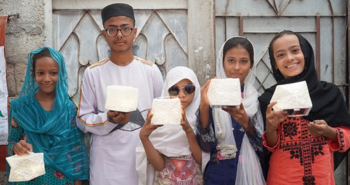
We delivered solar lanterns to the area so that children from impoverished families in slum areas, where power outages are frequent, could extend their study time, even a little.

In the Korangi area, located east of the Malir River, there are several non-formal schools operated by NPOs and volunteer teachers, providing educational opportunities to "Bengali" children.
《School Visits》

This school, located at the end of an alley off Korangi Creek Road, is a renovated private house. Children from 19 families sit facing each other, boys on one side and girls on the other, in a long, narrow classroom for lessons. After class, our CEO, Denma, explained how to use Carry the Sun and handed one to each household.

Located west of the first school, in a densely populated residential area, this school serves children from 20 families.
The students listened intently to the explanation of Carry the Sun.
■Third Middle School (ZEST235)
In a long-established, densely populated residential area on the east side of UMDC Road, there is Karachi's only school where 19 female students study for 10 years to acquire qualifications necessary for employment.
In anticipation of our visit, each of them had prepared handmade souvenirs.
《Home Visits》
"Street children" in Karachi who have parents and homes. However, due to their lack of nationality, these children are forced to "commute" to the streets daily.


